
Championing the emerging artists
Updated: Mar 4
Q&A with art curator Nicky Della Mote. Instagram: @nicky.mote
The London art scene is saturated, but every so often, a curator brings together an exhibition that cuts through the noise and creates true cultural impact.
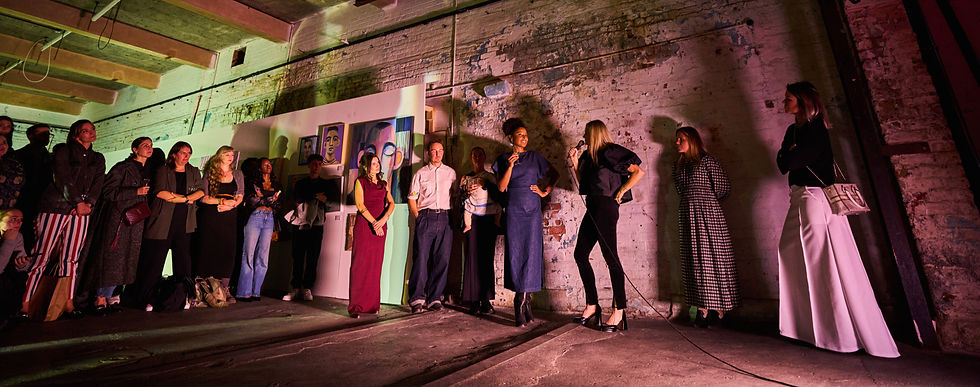
In October 25, I had the pleasure of exhibiting in LAYERS, a powerful show curated by Nicky Della Mote, who has developed a reputation for spotlighting emerging artists that are under represented in a very elitist art world.
As a mixed-media artist who transform toys and childhood nostalgia into Neo Pop Art, I found the concept of LAYERS (identity, depth, memory, and the complexity of self) deeply resonant. Little did I know I was going to find new homes to so many of my art pieces in one night!
Nicky’s day job is Head of International Social Commitment at Chanel, where she leads projects that create meaningful, measurable impact, combining marketing expertise with a deep focus on creativity and purpose. With nearly two decades of experience connecting brands and people in ways that resonate, endure and inspire change, at the heart of her work is putting people at the centre, empowering individuals and communities to feel seen, heard and valued.
Outside of Chanel she applies the same philosophy to the art world, championing emerging and underrepresented artists through curated exhibitions. By creating platforms for artists to share their vision, she connects diverse voices with wider audiences and helps broaden perspectives across the art world.
She believes that creativity and purpose have the power to transform not just brands, but the relationships we build with one another, and she is committed to using both to create lasting, positive impact.

In this interview, we explore curation, contemporary trends, nostalgia, London’s creative community, and what truly makes an artwork stand out today.
Q1 — What inspired you to create the ‘LAYERS’ exhibition, and what did you hope to communicate through it?
LAYERS was my first group exhibition, and it came from a very clear intention: to create a platform for emerging and underrepresented artists whose work and stories deserve to be seen more widely.
I was deliberate about both the scale and the setting. I chose a reclaimed Bermondsey warehouse because I wanted to give the artists a bigger, more ambitious stage - somewhere that could hold many people, conversations and the work itself. The space mattered. It wasn’t a blank canvas; it carried the imprint of previous communities and creatives, and that lived history added an emotional depth that felt closely connected to the artists and the stories within the work.
At its core, LAYERS was about opportunity. Bringing together a group of emerging artists and placing their work in front of my community of collectors, supporters and first-time buyers - creating the right conditions for visibility, confidence and connection. Transforming this reclaimed warehouse into a living exhibition allowed both the art and the artists to be experienced with honesty, scale and context.
Q2 — You curated artists from different disciplines — painting, sculpture, mixed media. What were you looking for when selecting participants?
I’m always led by the work, but it’s never just about the artwork. It’s about the artist behind it.
I spend time with the artists I work with, talking, listening and understanding how they think about their practice, what they’re trying to express, and where they are in their journey. Medium matters as a language; it’s often how an artist chooses to tell their story or share their experience.
I’m particularly drawn to emerging artists who are producing confident bodies of work but may not yet have access to the right platforms, collectors or scale. Part of my role is recognising that moment, understanding what an artist needs next, whether that’s visibility, context, confidence or connection - and helping to create the conditions for that to happen.
There’s also a strong instinctive element. When an artist has a clear point of view, a belief in what they’re making, and an openness to sharing it with the world, that’s when I know a collaboration can really work. LAYERS brought together artists at a similar stage, where being seen, supported and collected can make a meaningful difference.
Q3 — From a curator’s perspective, what makes an artwork ‘stand out’ today in such a saturated art scene?
In a crowded visual landscape, the work that stands out is work that’s clear and intentional. Confident in what it’s saying and why, without feeling overworked or over-positioned. That confidence usually comes from artists who genuinely believe in what they’re making and understand why they’re making it. You can feel when someone is fully behind their work. It’s not about having everything perfectly articulated, but about having a point of view and being ready to share it.
I’m also very aware that art doesn’t exist in isolation. It’s encountered by people, collectors, first-time buyers, and audiences who may not come from the art world at all. Work that resonates today often has an awareness of the world it sits in. It might respond to a cultural moment, a lived experience, a memory, or something the artist wants to bring into focus.
When artists hold that balance - staying true to their message, while being open to how others might experience it - the work connects more naturally. It invites people in, starts conversations, and feels relevant in a way that lasts.

Q4 — The exhibition explored depth, personality, and identity. How does joyful or colourful art fit into that narrative?
Joy is often how some people first enter a work, and that’s incredibly important. In particular, colour, playfulness and familiarity help break down barriers, particularly for first-time collectors. They invite people in emotionally, without requiring explanation or prior knowledge. From there, people can discover deeper layers at their own pace. For me, depth doesn’t have to be heavy. Some of the most emotionally resonant work in LAYERS was joyful on the surface, with meaning and complexity revealed over time.
Q5 — You included my Neo Pop / memory-inspired artwork in LAYERS. What drew you to that direction?
What first drew me to the neon pop works was the sense of playfulness. There’s an immediate lightness, colourful, joyful and easy to respond to. I liked that people didn’t need any explanation to engage.
From attending Kat’s previous exhibitions, I’d seen how people were responding to the work. The pieces naturally sparked conversation, people sharing memories, recognising something familiar, and connecting through their own experiences. That ability for the work to open dialogue, without being too prescriptive, felt important.
I knew the work would resonate strongly with my audience. It felt approachable for established collectors, while also welcoming for those encountering or buying art for the first time.
The space played an important role too. In the rawness of the reclaimed warehouse, the contrast worked beautifully. The bright colours and texture of the materials brought warmth and energy into the room and helped the space feel alive. That combination of playfulness, instinct and sensitivity to the environment is what made the work feel right for LAYERS.
Q6 — What role do you think nostalgia plays in contemporary art today?
Nostalgia creates recognition. It helps people feel anchored and open, particularly in uncertain times. The artists I’m most drawn to use nostalgia thoughtfully, as a way of reflecting on identity, personal history and shared experience. When handled with intention, it becomes a powerful bridge between the artwork and the viewer.

Q7 — You’ve worked with many emerging artists. What common qualities do successful ones share?
Consistency, openness and clarity of intention.
The artists who build sustainable practices are committed to their work, but also willing to learn adapt and evolve. They understand that visibility, relationships and professionalism matter alongside creativity. Most importantly, they’re open to sharing their work with the world, to conversation, to audience, and to what happens once the work leaves the studio. That openness, combined with care for how their work is presented and received, makes a real difference.
Q8 — How do collectors respond to playful or uplifting art today? Do you see a trend towards joy rather than seriousness?
Positively! LAYERS was the first time I exhibited Kat’s work, and over 80% of what we showed was purchased that opening evening. Many of those collectors were first-time buyers, which felt especially significant.
We’re living through uncertain times, and I’ve noticed people gravitating towards work that brings something into their everyday lives - whether that’s colour, energy, reflection or familiarity. In the context of LAYERS, joyful and emotionally engaging work helped people trust their instincts, opened conversations, and made collecting feel less intimidating.

Q9 — As a curator, what advice would you give someone who wants to start collecting art?
Start with what you genuinely love.
You don’t need to be an expert. Ask questions, take your time, and buy something that makes you feel something. Many of the collectors in my community started with one piece that spoke to them, and built from there. Collecting should feel approachable, not exclusive, and you should never feel like you need permission to trust your own response to a piece of work.
Q10 — What’s next for you, and what do you hope to see more of in the London art community?
I’d love to see more encouragement and belief in emerging and underrepresented artists - particularly at those moments where visibility, confidence and the right platform can genuinely change the trajectory of their work and career. There is so much talent that still struggles to be seen, and I believe the art world has a responsibility to open its doors wider and more intentionally.
I’m also very supportive of artists exploring alternative routes into the art world. We need more diversity in how work is produced, shown and shared. More collaboration, more cross-disciplinary projects, and more ways of building audiences beyond the traditional gallery model. When artists, curators, brands and communities work together, it creates new energy and more sustainable opportunities.
For me, I’ll be continuing to curate and produce both solo and group exhibitions, with a strong focus on creating new platforms for emerging artists at key moments in their careers. A core part of that is building audiences around the work, bringing new people into spaces, encouraging dialogue, and creating real connections between artists, collectors and communities through each exhibition.
Alongside this, I’m actively developing a new brand activation stream, leveraging my corporate network to create additional opportunities for artists through experiences that feel more unexpected, accessible and impactful, while still remaining personal and grounded.
At the heart of everything I do is connection and I am always open to a conversation - whether you’re an artist looking for guidance, a collector building confidence, a brand wanting to collaborate, or simply curious to learn more about what I do. I’d love to hear from you.
Nicky’s perspective is a reminder that great curation isn’t about gatekeeping, it’s about opening doors. Supporting emerging artists, welcoming first-time buyers, and building real connections is how culture moves forward. If this interview sparks something in you, follow her work, reach out, and keep showing up for the voices you want to see more of.


Comments